
Introduction
The youth-led protests in Nepal in 2025 showed how
quickly a generation’s frustrations can shift from digital spaces to the
streets, turning into a matter of political accountability. What started as
concerns about corruption, nepotism, unemployment, and social media
restrictions escalated into a national political crisis, highlighting both the
democratic potential and unpredictability of digitally organised youth
movements. In India, a different set of grievances brought young people to
Jantar Mantar, where issues like examination integrity, institutional
responsibility, and students’ futures sparked a larger conversation about the
relationship between citizens and the state.
The movement gained symbolic significance after
controversy over a comment by Chief Justice Surya Kant, which he later
clarified referred to individuals with fake qualifications rather than Indian youth.
What began as a protest about exams evolved into a series of events where
language shaped identity, identity fuelled resistance, and resistance raised
important questions about accountability, responsibility, dissent, and public
order. This essay does not seek to judge the participants but aims to explore
the various perceptions around the Jantar Mantar protest and what these events
reveal about youth, institutions, democratic responsibility, and the state's
connection with its citizens.
Jantar Mantar as a Protest Site

In the 1980s, Delhi’s Jantar Mantar emerged as a major protest site, and by
the early 1990s, it became an established space for public demonstrations. Why
did this scientific, historic, and civic landmark transform into a protest
venue? The primary reason is its central location in the national capital,
close to Parliament and key government offices, while not disrupting the city’s
essential functions. Over time, the astronomical observatory evolved into a
place where citizens, groups, and movements brought their concerns into the
public eye.
Built entirely of stone and masonry, the observatory reflects an era before
modern telescopes became common in India (Kawrani). Its unique architecture,
featuring ramps, arcs, and circular structures, draws attention and holds symbolic
meaning in its political role. The ramps symbolise the cosmic axis—the unmoving
centre of the universe; the arcs represent human uncertainty, bound to the
earth and unable to perceive full reality; and the circles evoke the cosmic
egg, encouraging inward reflection and the lowering of ego to foster growth.
The observatory’s symbolism—designed to observe beyond the skies and explore
the universe—parallels its role as a site where people express their hope to
watch and challenge the government system from the ground. This aligns with the
spirit of the Indian Constitution’s opening words, “We, the People of India,”
affirming that ultimate power resides with the citizens. Through their
protests, people send a clear message: “We are watching the government, which
has not responded to our concerns or fulfilled its responsibilities.”
Perceptions of the Protest
Every event or activity in our daily lives carries
multiple perceptions, and together these provide a holistic understanding of
what occurred. This research method allows us to explore all possible
perspectives on the various incidents during the widespread protest. Through
this, we gain insight into the responsibilities and accountability of both the
protesters and the government. Additionally, it serves to raise awareness among
the “people of India” about the vital importance of safeguarding the nation’s sovereignty
from external and internal forces that threaten the integrity of our
motherland.
·
A generational awakening (“Gen Z
revolt”)
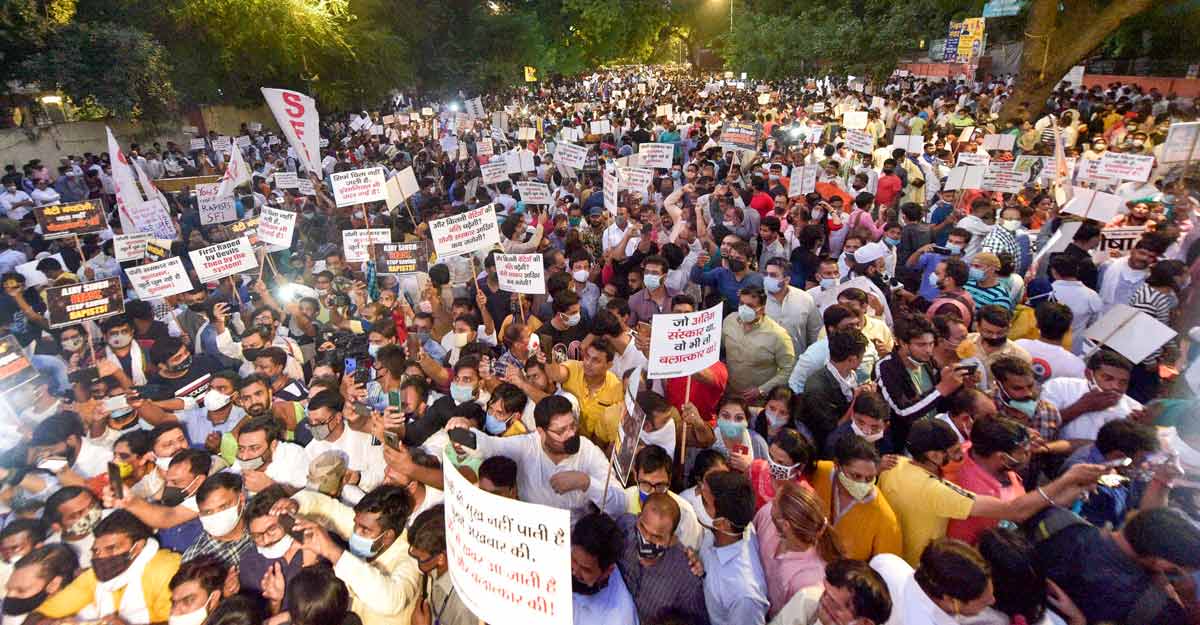 |
| onmanorama.com |
Through this essay, we're
making points or views upon "Generation Z" or "Gen Z".
This term refers to people born roughly between 1997 and 2012. Due to
technological advancement, this generation got the opportunity to understand
the issues which were present in society through the internet. This was the
very reason for the protest to be perceived not merely as a policy dispute but
as the emergence of a new political generation. Primarily this essay focuses
upon the Jantar Mantar protest led by those who had grown tired of the continuous
failure of the system."
Gen Zs are aware of V.S.
Naipaul’s description of India, in India: A Million Mutinies Now as a "country of a million little mutinies" – a phrase that captures the
recurring tension between institutions and citizens' grievances. While these
discrepancies in the system have long been evident, earlier generations largely
avoided confronting them directly. This generation refuses to stay silent and
wants to change the system to respond to the concern for the system. The NEET
exam raises serious concern over the accountability and the responsibility
of the government to respond. It turned the frustration of the students into
bringing transparency to the system. However, this protest was the product of
online mockery, which led to the alleged comment about the younger generation by
calling them "cockroaches".
·
The “Cockroach” Remark: Language,
Perception and Youth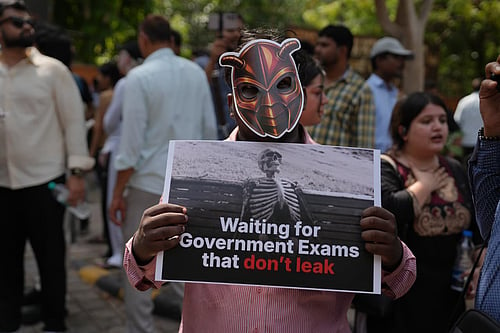
During a Supreme Court hearing on May 15, Chief Justice of India Surya Kant remarked that unemployed young people who turn to media, social media, or RTI activism to challenge the system behave "like cockroaches" (Service). The statement, made in the context of a case concerning fraudulent professional qualifications, quickly spread online and triggered widespread backlash. Thereafter, Gen Z show their stand that yes! We’re cockroaches; we Gen Zs are being forced to be the parasites by the previous generation. Apparently, many content creators question why we’re like that and why all the older generation didn’t let the system correct it. Why are people of your generation never refining the education system, which will make us more productive? Why you all were unable to provide transparency in the system.
This perception was inherited
by the youth, and later CJI Surya Kant clarified that by stating the bogus
degree holder is the real headache of the system and society, which creates a
lot of questions of integrity, on 16th May. During the hearing, CJI Surya Kant
criticised the people who create a strong headache for the nation and system by
attaining degrees by unlawful methods and coming into the legal profession
with questionable or fake qualifications. Through this, the CJI stated something
which is serious: how people are committing the crime by cheating the due
process and creating a problem in society. These people’s modus operandi is
always questionable, and honesty for society's interest can be compromised.
The original courtroom context
was not a general discussion about India’s youth. It arose from a dispute
concerning professional qualifications and alleged fake degrees. Yes, it is the
context from the CJI’s bench during a confrontation of a matter concerning a
lawyer’s attempt to attain the senior advocate designation. Further in the
statement by the CJI, he stated that those people who attain the bogus degrees
enter the profession. He said that similar people had entered the profession,
like in media, social media and other professions as well. He also clarified by
rejecting the claim that he was criticising the Indian youth generally and
described Indian youth as important to India’s development.
·
Satire Turned into Resistance
Emergence of satire of the
Cockroach Janta Party, which was started as an online mockery of the statement
given by the CJI. This stand appeared as Indian youth turned the unusual
comment into an opportunity to provide an instance of the institution. More of
that, Indian youngsters, instead of saying anything to the institution, started
questioning the older generation who’d not fulfilled their responsibility to
provide a better environment for the younger generation. They started
questioning the institution: why are we all in this situation? If you all elect
the politician, then why have you all been silent for all these years, and why haven't you asked the government to take responsibility?
The satire further changed
into a physical protest after a lot of mockery and questions. The satire
evolved into a physical protest, driven by demands for better education, free
and fair examinations, transparency, and accountability. The physical protest
came into action when the NEET exam got leaked, and the action against the
responsible authorities has not been taken properly.
·
From Resistance to Accountability
The cockroaches came together
to raise concerns over the discrepancies that lay in the system. The
"cockroach" label – discussed above – became the centre of intense
controversy. Why did it provoke such a strong reaction? The reappropriation was
being witnessed by the youth during the massive protest emergence. Youth turned
the comment into a satire, which changed the identity of the citizens among the
political leadership due to the resistance the young generation showed. Gen-Z
demonstrated that an insult aimed against them could be turned into a weapon of
their own resistance. "Gen-Z demonstrated that an insult aimed against
them could be turned into a weapon of their own resistance — one expressed
through the Jantar Mantar protest over the NEET paper leak."
"Since independence, few
issues have raised as serious a concern about systemic failure and policy
accountability as this one. It underscored the urgent need for citizens to
investigate the governance failures that allowed repeated examination irregularities
to go unchecked." We can scale this paper leak as crucial to the same
condition from the past. It was the need for the citizens to investigate the
corrupt governance, which was unable to stop the continuous events from
happening. The youngsters raised awareness in society about the need for
transparency in governance and about holding the government to its promises for
the nation's direction. The exam and education play a crucial role in shaping
the social order; if the exam is not fair and the education does not get into
the righteous hand, then the system will collapse.
The process of selecting the
capable personnel was being compromised; this was the actual reason for the
protest. Majorly, this protest was also being backed by the parents of this
generation because of the accountability of the government to provide the best
medical professionals. "If unqualified students are selected and later
assigned to treat patients, can they be expected to do so effectively?"
Will that student treat the patient efficiently? If not, who’s responsible?
That student or the institution that didn't care before the selection? Students
and parents are asking for accountability from the institution.
·
Jantar Mantar: From Protest to
Confrontation
The
protest at the astronomical observatory extended beyond its designated space
when the Cockroach Janta Party (CJP) organised a “Chalo Sansad” march on 20
July 2026, demanding accountability for examination irregularities and the
resignation of Education Minister Dharmendra Pradhan. Delhi Police stated that
permission for the march had not been granted and responded with heavy
barricades and security deployment. As protesters attempted to move toward
Parliament, clashes broke out between them and security personnel. Police
reported that protesters violated prohibitory orders, tried to breach
barricades, attacked personnel, and damaged property, resulting in over 118
police injuries (Ojha). Protesters alleged excessive use of force, with reports
documenting injuries and the use of lathis and tear gas. However, accounts of
the events differ.
A
Delhi Police FIR described the crowd as violent and justified the use of “mild
lathicharge” and tear gas to protect Parliament and sensitive installations (Ojha).
Meanwhile, videos and medical reports suggested disproportionate force against
protesters. This confrontation introduced a new dimension of accountability:
beyond questioning who was responsible for examination failures, it raised the
issue of the state's responsibility when using force against citizens
protesting. The Supreme Court later emphasised that peaceful and lawful protest
is constitutionally protected, and agitation alone does not justify police
excesses, urging discipline and restraint on both sides (G and Vishwanath).
Lincoln’s
famous phrase of government, “of the people, by the people, for the people",
offers a meaningful way to reflect on the democratic relationship between
citizens and the State. In India, this idea is uniquely expressed in the words
“We, the People of India” at the beginning of the Preamble, underscoring that
the Constitution derives its authority from the people (Preamble). Citizens
elect their representatives, and state institutions must operate within the
constitutional framework to ensure justice, liberty, equality, and fraternity.
The gathering at Jantar Mantar can thus be seen as another expression of this
relationship—citizens entering public space not only to challenge institutions
but also to remind them of the responsibility that comes with the authority
entrusted to them.
·
The Question of Responsibility
Protesters:
They must exercise their democratic right to dissent in a peaceful and lawful
way. Violence, damage to property, or ignoring legal restrictions can’t be
justified by valid grievances. The actions of a few individuals shouldn’t be
blamed on the whole movement. The real question is: how can protesters keep
their demands legitimate while making sure their methods reflect the principles
they stand for?
Police: Their job is to maintain public order while respecting the rights and dignity of protesters. When using their authority to manage safety threats, they must act with proportionality and restraint. It’s not just about whether the police acted to control the situation but also about whether they did so while respecting the right to dissent.
Government:
The government’s responsibility goes beyond managing the immediate consequences
of protests. It must also address the underlying issues that drive people to
protest—whether concerns about exams, recruitment, or the credibility of
institutions. True political accountability means responding not only to
protests but also to the root causes behind them.
Institutions:
Educational and public institutions must protect the integrity and credibility
of the systems they oversee. When failures affect students’ futures, it’s not
enough to blame individuals or issue administrative fixes. Institutions need
transparency, mechanisms for scrutiny, and the ability to reform to rebuild
public trust.
Citizens:
Responsibility doesn’t rest only with those in power. Citizens also have a duty
when exercising their democratic rights. Protesting and questioning authority
require informed participation, restraint, and awareness of consequences.
Citizens must ask themselves if they can hold institutions accountable while
also being accountable for their own actions. Democracy is a relationship where
both citizens and institutions answer to the constitutional principles that
sustain their bond.
National Security: External Influence and Internal Stability
The events in Nepal in 2025 offer an important regional backdrop to political concerns about youth-led movements in South Asia. The Nepalese Gen-Z protests arose mainly from domestic issues such as corruption, nepotism, economic inequality, and the government’s ban on major social media platforms. Organised largely through digital networks, the movement eventually led to the resignation of Prime Minister K. P. Sharma Oli. However, what followed showed how a mostly peaceful youth mobilisation can become vulnerable to disorder: Human Rights Watch found that some individuals involved in subsequent violence, arson, and attacks on public institutions seemed unconnected to the original Gen-Z movement, with allegations of political infiltration needing further investigation.
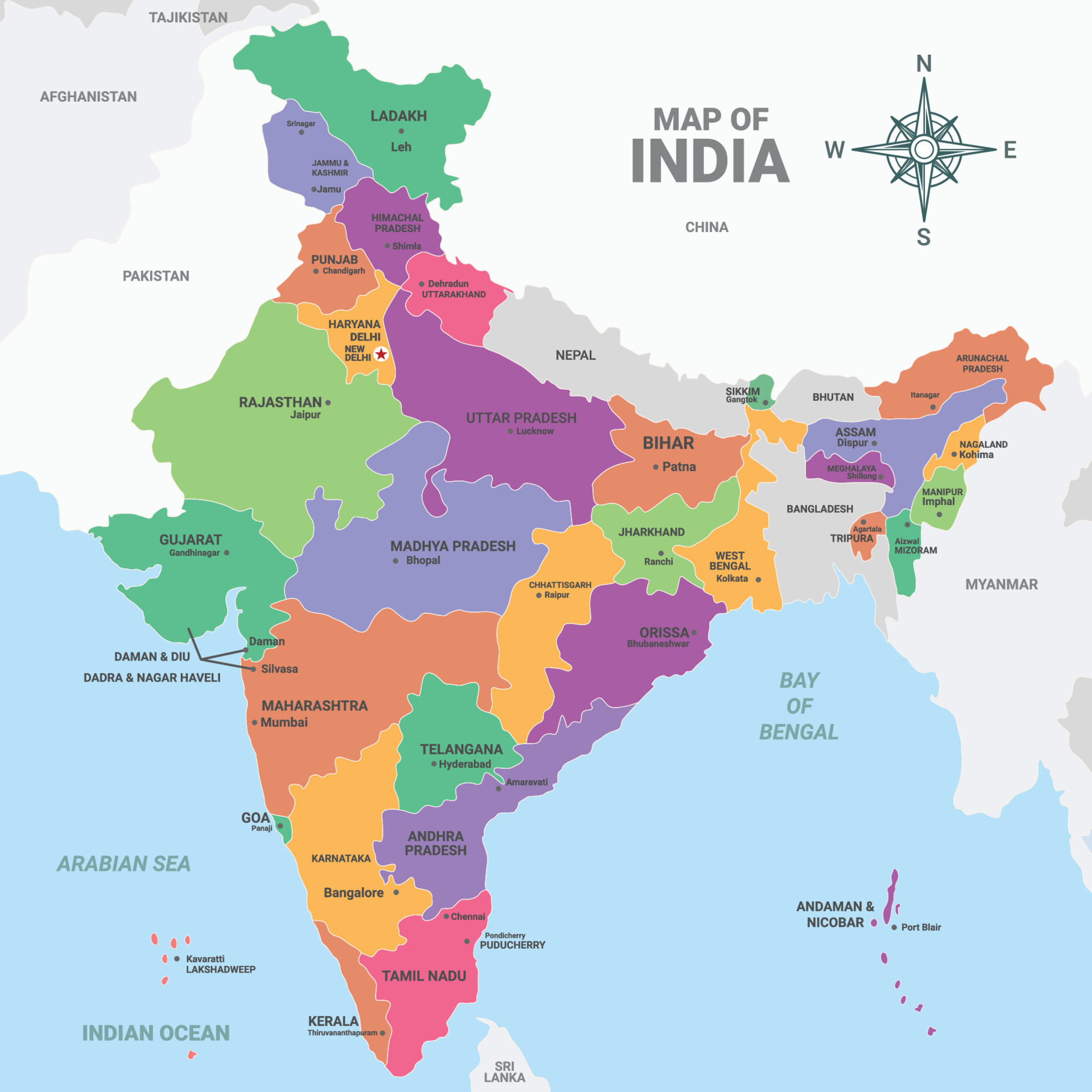
Nepal’s experience
raises a question for India, especially given its geographical proximity and
close social-political ties: how can a democratic nation distinguish between
genuine public mobilisation and efforts to exploit it for disorder or political
destabilisation? This does not mean Indian protests should automatically be
seen as foreign interference. Rather, Nepal shows that a movement can start
with legitimate grievances but later be influenced by actors, misinformation,
or conditions hard to separate from the original cause. The lesson is to not
distrust dissent but to stay vigilant that genuine grievances can be exploited
in a highly connected digital and political environment.
This issue also has a
broader geopolitical aspect. During the Cold War, countries were labelled
First, Second, and Third Worlds—a classification tied to a specific historical
and geopolitical era and not simply to developed or developing status. India’s
stance of non-alignment and strategic autonomy gave it a unique place among
newly independent states. While these terms have largely lost their political
relevance today, the underlying question of strategic autonomy remains: how can
India protect its internal democratic processes while navigating a world where
information, political narratives, and digital influence cross borders at
unprecedented speed?
Thus, the Jantar Mantar
protest can be viewed through the lens of maintaining internal stability
without suppressing legitimate dissent. A democratic state must protect its
sovereignty and prevent genuine public grievances from being turned into
violence or disorder; likewise, citizens must ensure their protests do not
become vehicles for violence or destruction. Nepal’s experience offers a
cautionary example—not proof of an external conspiracy—inviting a harder
question: how can India safeguard its democratic institutions from external
influence and internal destabilisation while protecting citizens’ rights to
question those very institutions? This tension, rather than assumptions of
foreign interference, is what makes national security relevant in the story of
Jantar Mantar.
Opinion
The Jantar Mantar protest should not be seen simply
as a confrontation between students and the government nor reduced to a
question of who was right or wrong at the barricades. It represents something
deeper: a generation trying to navigate its relationship with the institutions
that shape its education, employment, and future. The controversy over the
“cockroach” remark, the rise of the Cockroach Janta Party, the demands for
examination accountability, and the confrontation at Jantar Mantar each reflect
different stages of this evolving relationship. Protecting democratic space is
not the responsibility of one side alone. Protesters must maintain the
legitimacy of their demands through peaceful, responsible action; institutions
must uphold transparency and integrity; the government must remain accountable
to the citizens granting it authority; and the police must preserve public
order without disregarding the constitutional right to dissent.
At the same time, concerns persist about external
actors, including foreign countries, attempting to influence or control the
Government of India. This influence can manifest through political
interference, misinformation campaigns, or support for groups aiming to sway
public opinion or destabilise democratic processes. Safeguarding India’s
sovereignty and democratic institutions from such interference is essential to
maintaining internal stability and ensuring governance remains accountable to
its people. It is equally important to distinguish genuine domestic protests
from those that might be exploited or manipulated by external forces seeking
political disruption.
The greater lesson may not be whether the protest
succeeded or failed but what it reveals about democratic trust. Democracy is
not meaningful simply because citizens can vote; it must allow space for
questioning, criticism, and holding power accountable. Yet, dissent must be
paired with responsibility, just as authority must be coupled with
accountability. The events at Jantar Mantar challenge us with this question:
when people stand before the institutions they empower, are both sides ready to
recognise that democracy requires rights, responsibility, restraint, and
accountability? Perhaps the most significant image of Jantar Mantar is not the
barricades dividing protesters and police, but the observatory itself. Once
built to watch the movements of the heavens, it has become a place where
citizens observe the movements of power. “We, the People of India” is not just
the Constitution’s opening phrase but a reminder that democratic authority
rests with the people. The question is not whether citizens should question the
state or whether the state should maintain order, but how both can fulfil these
responsibilities without undermining the democratic bond that gives them
meaning. In this sense, Jantar Mantar was more than a protest site—it became a
site of reflection, where a generation was asking not just to be heard but what it truly means to be heard in a democracy.
Works cited:
1. Kawrani, N. "Jantar Mantar: How an
18th-Century Observatory Became India’s Best-Known Protest Street. "The
Better India, 2026, https://thebetterindia.com/culture/jantar-mantar-maharasja-sawai-jai-singh-history-observatory-to-protest-site-delhi-12183868.
Accessed 08 Aug. 2026.
2.
Service, E. N. "‘Misquoted by media’: CJI
Surya Kant clarifies ‘cockroaches’ remark on unemployed youth | Legal News – The Indian Express." n.d.,
https://indianexpress.com/article/legal-news/cji-surya-kant-clarifies-cockroaches-remark-fake-degrees-row-10692979/.
Accessed 9 Aug. 2026.
3.
Ojha, A. "CJP protest Delhi violence: 70
detained, 118 police personnel injured - India Today." India Today, 2026,
https://www.indiatoday.in/india/story/cjp-protest-delhi-violence-70-detained-50-police-injured-buses-attacked-2952212-2026-07-20.
Accessed 14 Aug. 2026.
4. Ahmed, A. et al. "Thousands protest in
India after clashes, despite Modi assuring action on exams | Reuters."
n.d.,
https://www.reuters.com/world/india/india-youth-group-says-protest-continue-after-delhi-clashes-injure-180-2026-07-21/.
Accessed 14 Aug. 2026.
5. G, A., and Vishwanath A. "Right to peaceful
protest guaranteed; police excesses can be examined: Supreme Court | Legal News
- The Indian Express." n.d.,
https://indianexpress.com/article/legal-news/cant-lathicharge-just-because-there-was-agitation-supreme-court-says-on-cjp-protests-10805269/.
Accessed 14 Aug. 2026.
6. "Preamble - Constitution of India."
Constitution of India, 2023,
https://www.constitutionofindia.net/articles/preamble/. Accessed 14 Aug. 2026.
7.
Naipaul, V. S. India: A Million Mutinies Now.
Heinemann, 1990.
8.
Human Rights Watch. Nepal: Unlawful Use of
Force During 'Gen Z' Protest." Human Rights Watch, 20 Nov. 2025,
www.hrw.org/news/2025/11/20/nepal-unlawful-use-of-force-during-gen-z-protest.
Accessed 14 Aug. 2026.
🇮🇳 Happy Independence Day to all readers! 🇮🇳
Comments
Post a Comment